Digital Photography and Imaging - Project 2
Week 6 - 7
Ataka Lukman Hamzah / 0350012 / BDCM Digital Photography & Imaging
Project 2 / Exercise

LECTURE
Week 7
Colour Theory
Colour theory is both the science and art of using color. It explains how human perceive color and the messages that is given by each colours.
There are two types of colour wheels:
- CMYK (Cyan, magenta, Yellow, Black): Primary colors of printing
- RGB (Red, Green, Blue): Color used to display on your computer screen
RGB
RGB is a additive color mixing model. The colours are created my mixing red, green and blue light sources of various intensities.
CMYK is subtractive color mixing model. The colours are created by the subtraction of light.

In colours there are hue, shade, tint and tone. Hue is the most basic of color terms, the pure color. Shade is a hue that has been added with black. Tint is a hue that is added by white. Lastly, tone is a color which has been added with either white or grey.

Colour Harmony
Colour harmony is the arrangement of the colors in design in the most attractive and effective way for users' perception.
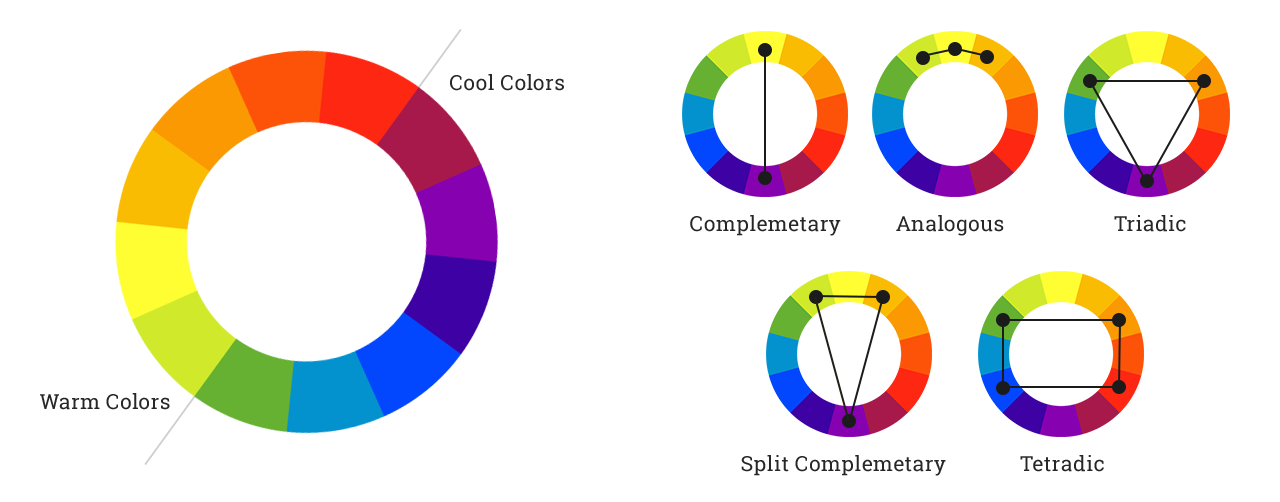
Analogous
Analogous are 3 colors located right next to each other on the color wheel.
Complementary
Colours that are the opposite on the colour wheel. This color harmony produces high contrast.
Split-Complementary
The use of three colours. Find its complement color and then use the two colours on either side of it.
Triadic
Triadic colors are evenly spaced around the color wheel and tend to be very bright and dynamic.
INSTRUCTIONS
Select ONE B&W photo from the folder:
Search photo online for Skin/Hair references. Recolour the photo for submission.
The B&W photo that I chose for submission:
 |
| Chosen B&W Photo |
 |
| Skin and Hair Reference |
 |
| recoloring the Skin |
 |
| recoloring the clothes |
 |
| recoloring the background I tried to use complementary colour on the background and clothes to create a great contrast of the subject and the background. |


Comments
Post a Comment